
Cloud-Managed Switching: How Cisco Meraki MS Series Transforms Network Management for Growing Businesses
Discover how Cisco Meraki's cloud-managed MS switching portfolio eliminates network complexity, delivers zero-touch deployment, and gives IT teams complete visibility from a single dashboard — without the need for on-site engineers.
Ready to buy Cisco Meraki?
Get a custom quote from our specialists in under 4 hours.
Quick Answer
What is Cisco Meraki cloud-managed switching?
Cisco Meraki cloud-managed switches (MS series) are enterprise-grade network switches controlled entirely through Meraki's web-based Dashboard — no command-line interface required. You configure VLANs, security policies, PoE settings, and firmware updates from any browser, for every switch across every location, at once.
Best for: Businesses with 10–500 employees, multiple locations, or limited in-house IT staff. If you want your switches to deploy themselves, update themselves, and alert you before problems escalate — Meraki MS is the answer.
Every device in your office — laptops, IP phones, printers, security cameras, wireless access points — connects to the network through a switch. For most businesses, that switch sits in a closet, quietly doing its job until something breaks. And when it does, the scramble begins: dig up credentials, ssh in, decipher the CLI, hope nothing cascades downstream. Cisco Meraki's cloud-managed MS switching portfolio changes that equation entirely. From a single browser tab, your entire switching infrastructure becomes visible, configurable, and self-healing — whether you have one office or fifty.
Expert Perspective
"The single biggest pain point we see in small and mid-sized businesses is the gap between the network they have and the visibility they need. Most SMBs don't find out their switch failed until an employee can't print, get online, or reach the server. Meraki closes that gap — you know about a problem before the help desk ticket gets filed."
— Novbox IT Engineering Team, Las Vegas, NV
What "Cloud-Managed" Actually Means for Your Network
Traditional enterprise switches require deep CLI expertise, on-site configuration sessions, and often dedicated network engineers just to manage VLANs, QoS policies, and port configurations. Cisco Meraki takes a fundamentally different approach: every MS switch — from the compact 8-port MS130-8 to the high-performance Catalyst 9300-M — is managed entirely through the Meraki Dashboard, a cloud-based control plane accessible from any browser, anywhere in the world.
When you need to configure a new VLAN across 20 branch switches, you do it once in the dashboard and it propagates instantly to every device. When a port goes down at your satellite office, you see the alert before your employees notice the problem. When a new hire joins and needs access to specific network segments, a few clicks in the dashboard handle it — no on-site visit required.
Key capabilities of Meraki cloud-managed switching:
- ✓ True zero-touch provisioning — ship a switch directly to a remote site; it downloads its configuration automatically when plugged in, with no engineer on-site
- ✓ Unified single dashboard — manage switches, access points, and security appliances from one interface, one login
- ✓ Automatic firmware updates — scheduled, tested, and pushed with zero manual intervention, keeping every switch current with security patches
- ✓ Live topology maps — see exactly how every device is physically and logically connected, with real-time traffic and utilization data
- ✓ Built-in anomaly detection — the dashboard flags rogue DHCP servers, unusual traffic patterns, and port-level anomalies automatically
The MS Series Lineup: Verified Specs for Every Deployment
One of the strengths of the Meraki switching portfolio is the depth of its range. There's no one-size-fits-all in networking, and the MS series spans compact office switches all the way to high-density aggregation hardware — all managed identically through the same dashboard. Here's what each tier actually delivers, based on Cisco's official datasheets:
Compact switches (MS130 series) are built for small offices, retail locations, and branch deployments where rack space is at a premium. The MS130-8 ships with 8×1 GbE RJ45 ports and 2×1 GbE SFP uplinks, with PoE variants providing up to 120W of power budget for connected devices. The MS130R adds an industrial-hardened enclosure rated for hot, cold, and tight environments — warehouses, manufacturing floors, outdoor enclosures — while maintaining full cloud management.
Access switches (MS150 series) are designed for modern wireless-heavy campuses. The MS150's headline capability is physical stacking (up to 2×80G) and multigigabit (mGig) port options — critical for Wi-Fi 6/6E/7 access points that push past the 1G uplink ceiling. PoE capabilities scale from standard PoE+ (30W) on base models up to UPOE+ (90W per port) on the MS150-24MP and MS150-48MP — enough to power the most demanding 802.3bt devices including high-zoom PTZ cameras and digital displays.
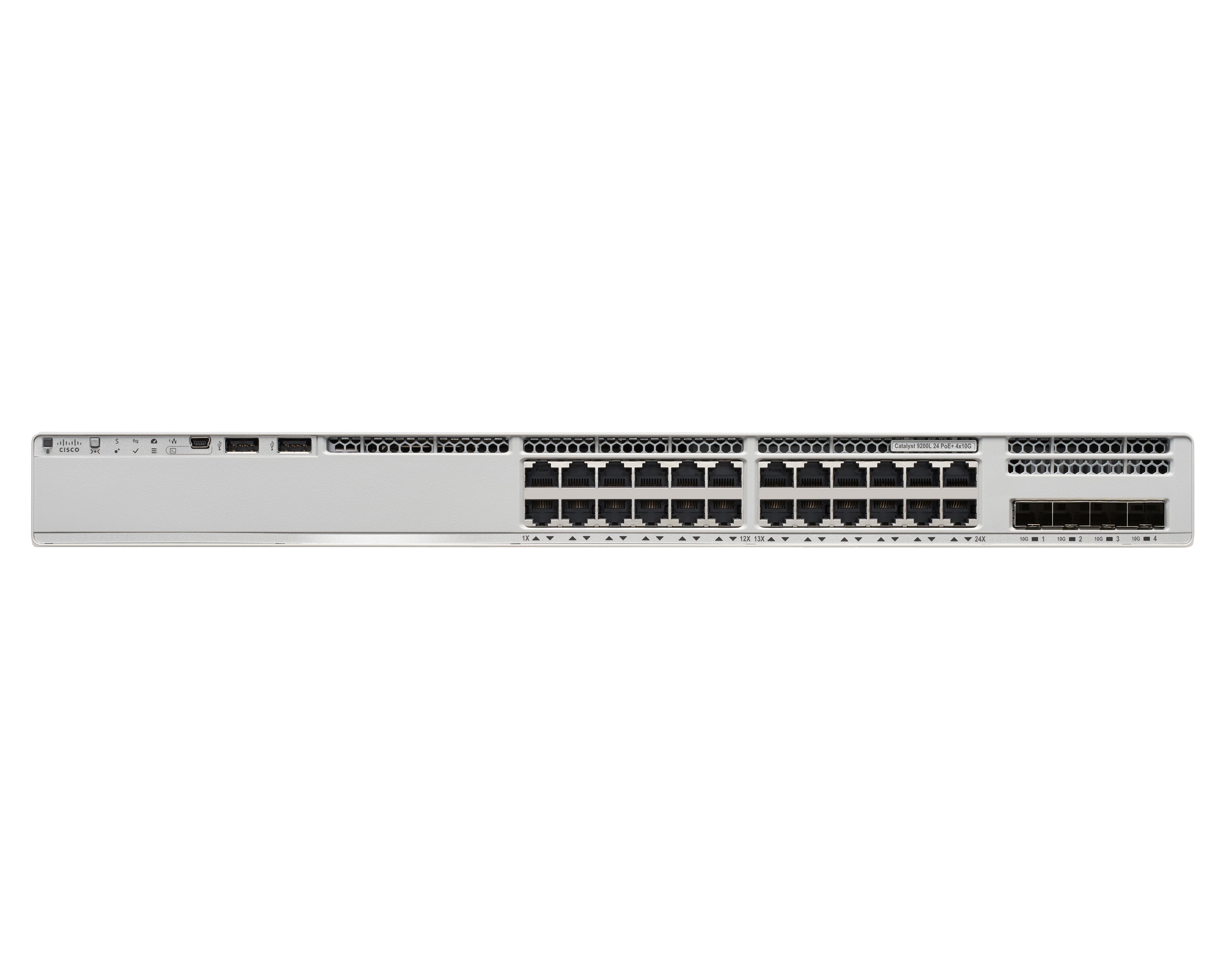
Advanced stackable switches (Catalyst 9200L-M) represent the next step in Cisco's cloud-native switching lineup. Offered in 24 and 48-port configurations with 4×10G or 2×25G uplinks, the 9200L-M supports 30W PoE+, optional redundant power supplies, and a 1440W total power budget — all with IOS XE running natively under Meraki Dashboard management from Day 0.
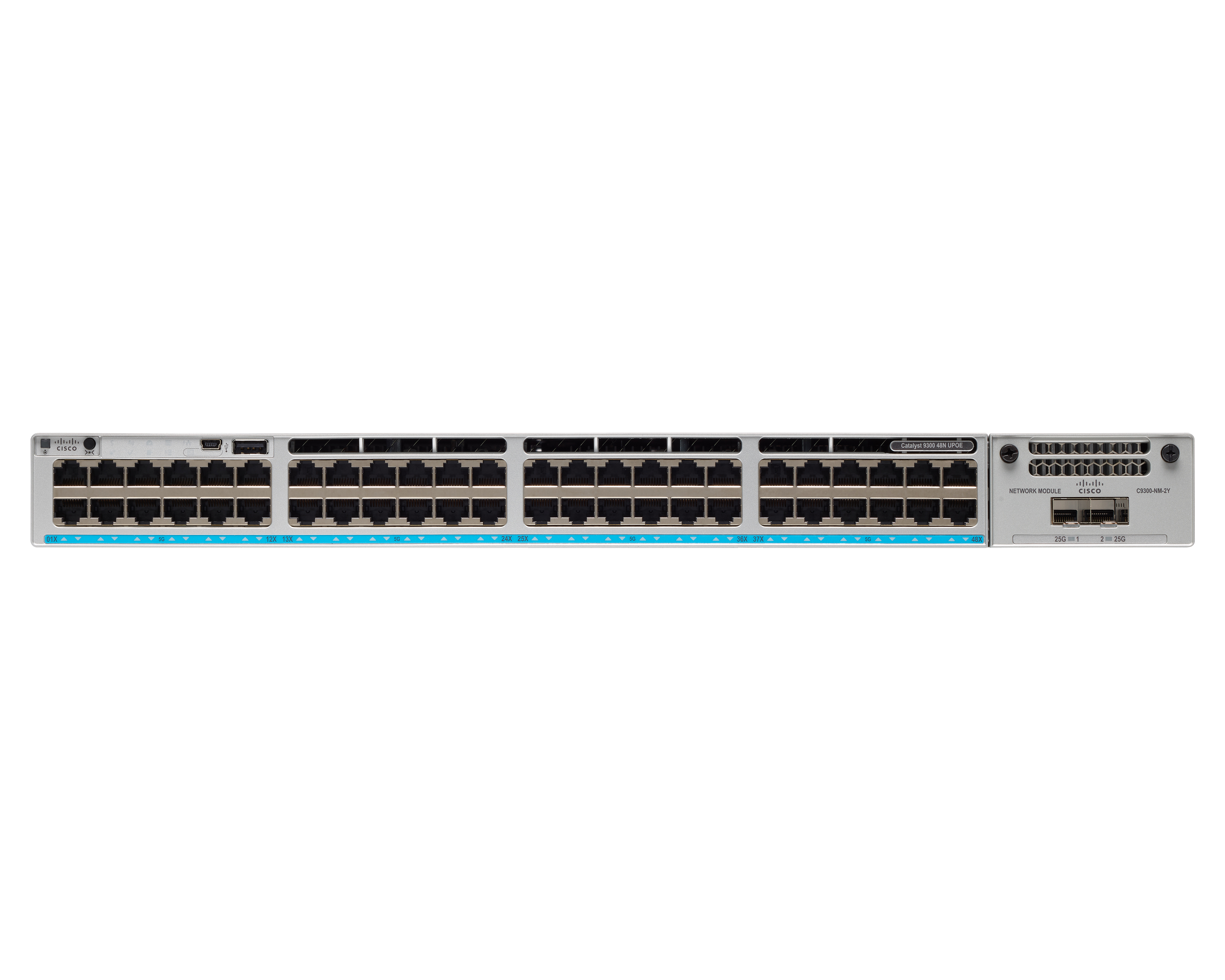
High-performance switches (Catalyst 9300-M) bring enterprise-grade Layer 3 capabilities — static and dynamic routing, DHCP server, NBAR2 application visibility across 1,500+ applications — into the Meraki management ecosystem. Standard Catalyst 9300-M models support up to 60W UPOE per port; the Catalyst 9300X-M models step up to 90W UPOE+ per port, making them the right choice for high-power smart building deployments including PTZ cameras, powered ceiling speakers, and smart building sensors.
- ✓ MS130 compact: 8–48 ports, up to 120–740W PoE budget, ideal for branch offices
- ✓ MS150 stackable: 2×80G physical stacking, mGig ports, UPOE+ (90W) on MP models
- ✓ Catalyst 9200L-M: cloud-native IOS XE, 1440W redundant power budget
- ✓ Catalyst 9300-M / 9300X-M: Layer 3 routing, 60W–90W UPOE, 480G physical stacking
PoE Switching: Powering Every Device in Your Building
Power over Ethernet has quietly become the backbone of the modern office. Every wireless access point, VoIP phone, security camera, and environmental sensor in your building depends on PoE to function without a dedicated power outlet — which means your switch's PoE budget and per-port wattage directly determine what devices you can deploy and where.
Meraki's MS lineup covers the full PoE spectrum. Standard PoE+ (30W) handles VoIP phones and basic access points. UPOE (60W) is available on Catalyst 9300-M models for higher-demand devices. UPOE+ (90W) — available on the MS150-MP and Catalyst 9300X-M — supports the most power-hungry 802.3bt devices: outdoor PTZ cameras, digital signage, and smart building systems. Critically, Meraki gives you real-time per-port power monitoring in the dashboard, so you can spot power budget creep before it causes unexpected shutdowns.
Common Mistake We See
"Businesses often undersize their PoE budget when buying switches. They count ports, not watts. A 48-port switch with 740W total budget running 24 access points at 30W each is already at the ceiling before you add a single IP phone or camera. Always calculate your real PoE draw before selecting a model — our team does this as part of every pre-deployment assessment."
- ✓ PoE+ (30W per port) — VoIP phones, standard Wi-Fi access points
- ✓ UPOE (60W per port) — Catalyst 9300-M standard models; high-power APs, dual-radio APs
- ✓ UPOE+ (90W per port) — MS150-MP models and Catalyst 9300X-M; PTZ cameras, smart building devices
- ✓ Dashboard power monitoring — real-time per-port wattage, configurable limits, budget alerts
Security Built Into Every Port — Not Bolted On Later
A switch is often the least scrutinized security boundary in a business network — and that's exactly why attackers target it. Rogue devices plugging into open ports, VLAN hopping attacks, and unauthorized DHCP servers are real threats that generic unmanaged switches simply cannot address. Meraki MS switches integrate security at the port level, enforced from the cloud so policies stay consistent across every location.
IEEE 802.1X port-level authentication — with MAC-based RADIUS support — ensures only credentialed devices gain access to specific VLANs. DHCP snooping is enabled per-VLAN and actively alerts you to rogue DHCP servers across the entire network, not just the local segment. Dynamic ARP Inspection validates ARP packets against a trusted binding table to prevent man-in-the-middle attacks. And Meraki's built-in layer 7 fingerprinting — unique to Meraki in the switching space — identifies not just devices but the applications running on them, giving you visibility that traditional switches can't provide at any price.
- ✓ IEEE 802.1X with MAC-based RADIUS — port-level authentication, device credentialing
- ✓ DHCP snooping with rogue server alerting — network-wide, not just local segment
- ✓ Dynamic ARP Inspection — blocks man-in-the-middle attacks at the port level
- ✓ Layer 7 application fingerprinting — identify 1,500+ apps on Catalyst 9300-M models
- ✓ VLAN segmentation — isolate IoT, guest, and corporate traffic with a few dashboard clicks
Scaling to New Locations Without the Complexity
Growth is supposed to be a good problem to have. But for IT teams managing traditional switching infrastructure, every new office means another site visit, another round of CLI commands, and another network that's slightly different from every other network in the fleet. Meraki's template-based configuration eliminates that entirely.
Define your standard configuration once — VLANs, QoS policies, 802.1X settings, port profiles, firmware schedules — save it as a template, and apply it to every new switch that comes online. When you open your fifth location, the switch ships directly to the site, an employee plugs it in, and within minutes it downloads its configuration from the cloud. The network is operational before your IT team has finished their morning coffee. No truck roll. No late-night config calls. No surprises.
Meraki's virtual stacking technology lets you manage thousands of switch ports from a single dashboard view — change a policy across 200 ports at 10 locations simultaneously. That kind of leverage is what lets a two-person IT team manage a 20-location retail chain without losing their sanity.
- ✓ Configuration templates — standardize your entire fleet from one template, applied instantly
- ✓ Virtual stacking — manage thousands of ports across hundreds of sites from a single view
- ✓ Zero-touch deployment — switches self-configure on first boot, no on-site engineer needed
- ✓ Lifetime hardware warranty — every MS switch includes next-day advance hardware replacement
Is Cloud-Managed Switching Right for Your Business?
If you have more than one location, are planning to grow, or simply want to stop spending IT hours on reactive network problems — the answer is yes. Cloud-managed switching pays the biggest dividends for businesses that don't have dedicated network engineers on staff, that operate distributed environments (retail, hospitality, professional services), or that need a consistent and auditable network configuration across every site.
It's also worth considering the warranty: every Cisco Meraki MS switch includes a limited lifetime hardware warranty with next-day advance replacement. For an SMB, that's peace of mind that's genuinely hard to put a dollar value on — knowing that a hardware failure at your busiest location won't mean days of downtime waiting for a replacement to ship.
The Meraki MS series integrates directly with Meraki wireless, security appliances, and cellular gateways under one dashboard. If you're already running any Meraki product, adding cloud-managed switching consolidates your entire network stack into a single pane of glass — and that's where the real operational savings compound over time.
Managing 40 switches across 12 locations from a single dashboard cut our network admin time by 70 percent. Cloud management changed everything for us.
Why Businesses Choose Cloud-Managed Switching
Enterprise switching that deploys in minutes and manages itself from anywhere in the world.
Zero-Touch Deployment
Ship a switch to any location and it self-configures from the cloud. No on-site IT required for new offices or store openings.
Learn More ›Stacking & Redundancy
Virtual stacking across your entire network with automatic failover. Enterprise resilience without enterprise complexity.
Learn More ›Smart PoE Management
Power access points, cameras, and phones directly from the switch. Intelligent PoE budgeting ensures critical devices always stay powered.
Learn More ›The Power of the Meraki Dashboard
At the heart of Cisco Meraki is an intuitive cloud dashboard that unifies wireless, switching, security, and IoT management into a single view. IT teams can manage their entire distributed infrastructure from anywhere.
- Real-time visibility into network health and client connectivity
- AI-powered analytics that predict issues before they impact users
- Automated firmware updates and security patching
- Role-based access control and audit logging

Zero-touch provisioning means we ship a switch to a new store and it configures itself. Our network team supports 200 sites without leaving the office.
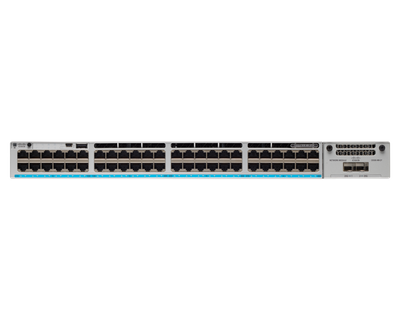
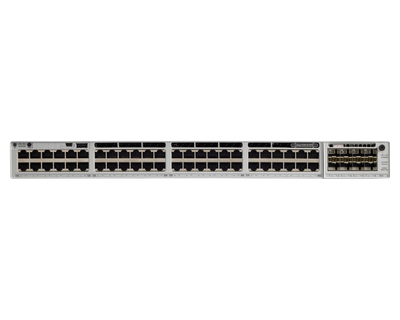
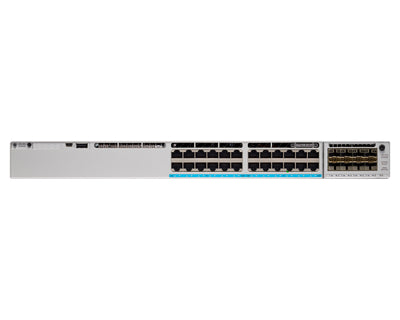
Featured Cloud-Managed Products
Cloud-managed switches and networking infrastructure by Cisco Meraki.
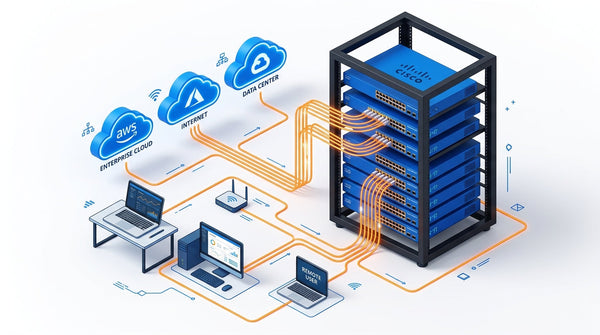
Seamless Integration with Your IT Stack
Meraki works alongside the collaboration, security, and productivity tools your team depends on.
- VPN integration with major identity providers
- SAML and RADIUS authentication support
- MDM and endpoint management compatibility
- Open APIs for custom automation workflows
Ready to simplify your network?
Discover how Cisco Meraki cloud-managed networking can transform your business IT infrastructure.
Contact Us